Suicidal Tendencies - An Evolution
My introduction with Suicidal Tendencies began in the early 90s. I was partially aware of some of the skate and punk movements, but I wasn't as interested as most of my peers. I remember the ethos of style, attitude, and locality. Many of the skate bands came from the Southern California coastal areas, which shaped a lot of the underground scene (at that time).
A lot of the attitude relied on surf culture, but also a urban aspect that carried over to the suburban lifestyle. This is my understanding of the birth of that style.I feel its been young persons interest, as I haven't kept up as youthful angst doesn't fit a forty year old mindset.
Of the entire Suicidal Tendencies era, I lean more toward the self titled record. Following all the way through until their last with the major label Epic records: Suicidal For Life in 1994. What the group produced in the later half of the 90's I was aware of, some of it was okay, I didn't connect with any of it.
The first S.T. record I could relate because of the angst, hormones, and frustrations with finding an identity in a world with so many contradictions. This splintered outwards at my awkwardness, and those songs in that world to me felt more allegorical, and spoke more closely to my predilections.
Each record up til Suicidal For Life had a kind of evolution. I postulate that they moved from a garage Do It Yourself (DIY) hardcore/crossover mechanic (indie), eventually morphing and settling into an extremely well polished and heavily produced studio machine.
I got the brief opportunity to seeing Suicidal Tendencies play during their The Art of Rebellion jaunt with Megadeth with the Headbangers Ball tour in 1992. A critical issue/fault I had was frontman Mike Muir was barely audible, and in a live setting tended to be drowned out by the overpowered amps, drums, and bass.
Plus Mike's definitely can be a bit redundant with bravado, as he preached at that time (i.e. material off of Controlled By Hatred, Lights, Camera, Revolution, and The Art of Rebellion). The musicianship was always the focal point, and I couldn't fault their performance based on Mike's hard to decipher vocals.
The band could play their asses off, yet I think they were a studio band and I may have been a tad too late to their brand (shtick). I think if I had lived in the Venice Beach area and seen this band starting out, it wouldn't have felt like a strange experience.
Studious pieces of this band I liked were the guitar tones of Mike Clark, and Rocky George. bassists Louiche Mayorga, and Robert Trujillo. These gents stood out to me as they really gave their style and sound around the ethos of the band.
Many drummers have come and gone, but I can distinctly tell which record is from which era. The production is very much in line with the times it was created (80's raw, higher treble mixed, early 90's more bass driven, drum snare pops).
One guitarist that I think stood out for them was Rocky George. His time with Suicidal Tendencies brought soul to the wild noodle fest that permeated so much of the crossover style. His work with Join The Army and until Suicidal For Life have tone that punch which stands out.
Rocky's style (I believe) has this tendency of elongating notes and feeling out the performance which stood out to me, I still feel he accentuates Mike Clark's playing, and they feed off each other with a push pull component, kind of like a mechanical gear. After 1994's Suicidal For Life he dropped off the face of the Earth for awhile. It wasn't until the late 2000's I found out he was in Fishbone, and to me that is super cool. I will also say he is a hard gentleman to talk to.
Their older material levied an informative component to it. Though Suicidal Tendencies are still around, being on either a fourth or fifth incarnation, and with a different line ups, they still pack them in outside of the U.S.
The way we look at bands and how they evolve is a testament in how we ourselves develop over the duration of those careers. Because I can be a brutally honest with assessing the overall complexion, this band was another solid beacon for me in troubled times.
Though time and distance have elongated from when they were fresh, and distinctly off center. With Mike's blatant street macho aspect, they were something to take notice in a field of flooded sameness. It was nice to marvel in they're individualism, but that comparison I think ends where the words are concerned. I feel much different about their message now, in that there are gems sprinkled about, but by no means is their work perfect.
Reflective at looking at this band, what it represented is that still underground exposure, as validates what I was thinking about a lot at that time. It has bludgeoned me with a sense of loss, as the passage of time has hit, the realities of capturing lighting in a bottle. These seemed to have a direct effect on my outlook on the band. Thanks for reading.
Up next Infectious Grooves.
B.
Showing posts with label 80's Era. Show all posts
Showing posts with label 80's Era. Show all posts
Wednesday, March 4, 2015

Saturday, December 7, 2013
Inxs - Overall Career (80's and 90's Era)
Members: Kirk Pengilly Sax, Guitar, Keys Michael Hutchence Vox, Andrew Farriss Keys, Guitars, Tim Farriss Guitars, Jon Farriss Drummer, Garry Gary Beers Bassist.
I learned about INXS from a modern music radio station called KJQ. KJQ broadcasted many bands from Australia such as Nick Cave, The Divinyls, The Church, Big Pig, Midnight Oil, Men At Work, (New Zealand's) Split Endz, Crowded House, Hoodoo Gurus, Max Q, and Icehouse.
Hailing from Sydney Australia they were one of many first international bands I took keen interest in. Starting out in the late 1970's with a distinct funky rock and roll vibe, and finishing out in the 90s as a kind of disco revival act.
 My first entry into INXS was the Shabooh Shoobah(1982) record. Many of the songs were low key, and constrained. My initial assessment was heightened by a lack of knowledge to what this band was doing at that time.
I've tempered my views in the years since I was first introduced with this record (1988), yet I hold firm this wasn't their best work. What followed afterwards was influenced by a fast paced non-stop energy.
In recent years I finally got into uncovering Underneath the Colours(1981), and their self titled INXS(1980), For what came after Shabooh Shoobah, these records are straight ahead, vibrant, and somewhat carefree before notoriety hit them. Both records to my ears have a carousel aspect, a late 70's roller rink style.
Drum wise it's peppy, guitars are memorable, keyboards have a experimental side but stick to a formula to be recognizable to the early evolution of the band. I specifically enjoy how there is a a kind of fluidity with their composition.
Those records bring together rhythm, and hook. The songs are calculated, and premeditated. There is not a lot of wiggle room with variation (at first), but underneath there is a fatty gristle which grips the listener.
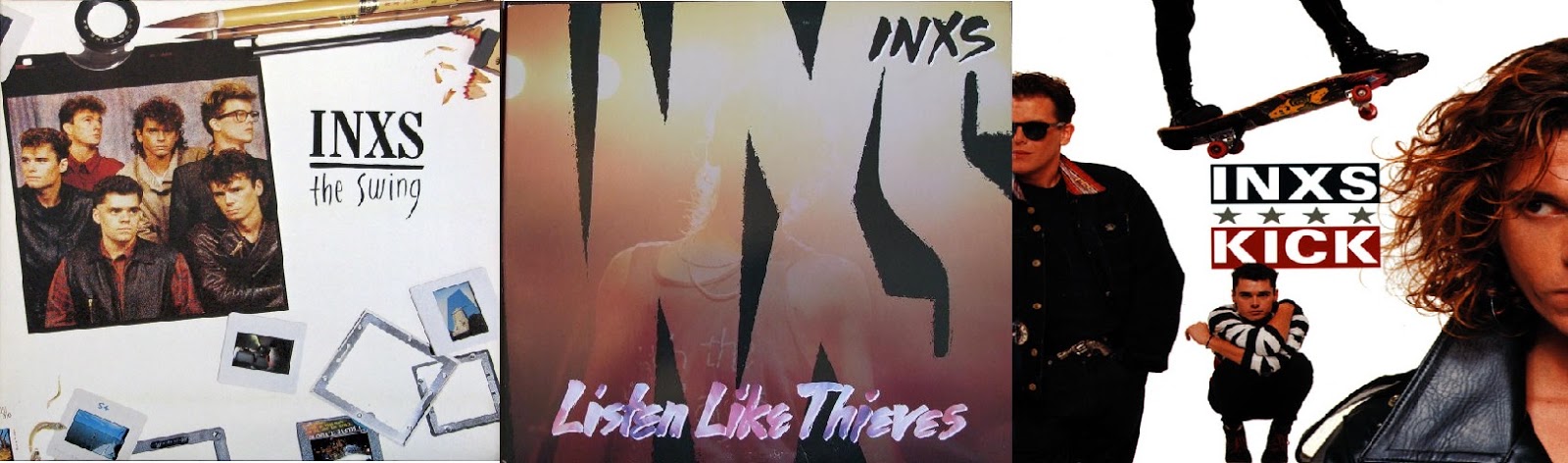 The Swing(1984) has a complete shift in tonality, whereas Shabooh Shoobah had a dry listening complexion. The Swing throws that record aside and pushes through what essentially becomes their 'first' real U.S. breakthrough record. It is pop without any care.
There are very noticeable levels of a last gasp of the post-punk/new wave component before settling into standard modern rock & roll, which Michael Hutchence declares dead with Full Moon, Dirty Hearts, (kind of prophetic in a strange way). The mix has a kind of stomp, pulsation with a deft producers hand. Very premeditated.
Listen Like Thieves(1985) drops a year later. This record piles on a few more memorable beats, vocal harmonies, and adds slabs of gristly punctuation to the production. A forceful core embodying a work ethic and concrete brand recognition. They had a kind of modern music component while balancing out The Swing's gloss.
When Kick arrives in 1987, this record punches the listener in the face. Its not overt, its blatant. Produced by Chris Thomas, each song feels perfected, nothing is subtle, there are calculated tracks which stand out on their own, but for all the international exposure this album got, I began to feel kind of burnt out by the polish elicited.
 Their ten year as a band is celebrated with X, arriving in the early 90's giving a glimpse of where the band was morphing into something more contemporary and refined whilst not going outside of the precept set before with Kick.
Again produced by Chris Thomas, this record has a couple decent tracks, I felt the band knew they peaked, and knowing this, they opted to plug along trying out new avenues. Since it's release, I've let it grow, age, and feel confident the entire album has a type of lounge component.
Welcome To Wherever You Are(1992) places them in unknown territory. Much of the material here tries evoking grander things but it falls short of its intention. There are a couple standout tracks, but the overall package kind of lost its mark. I think one of the issues I had with this record was that they tried to push their comfort zone outside of what expected.
Even with the first track giving a traveled vibe, the feel of this record tries to balance out the saccharine but it oozes forth with an unsure template. There are precise tidbits of ideas jelling, but the overall cohesive work feels disjointed, while being a mangled mixture in a uncomfortable manner.
Full Moon, Dirty Hearts(1993), I think throws away any preconceived expectation, and starts from scratch. This record returns them to their roots with a live setting. Out of the 90's material, I like this record the most because it has a warmth, a charm that got me into what I initially liked about them. Having guests like Ray Charles, and Chrissy Hinde of The Pretenders binds them to prior era's of music industry, which gave the record an interesting variation. There is groove dripping all over, it isn't perfect and that I think sells it for me.
 Elegantly Wasted released in early 1997 was difficult to get into. I was annoyed by the 90's disco revival component. I still feel a lot of the alternative at the later stages of the 90's was uninteresting, and not as cohesive.
Produced by Bob Clearmountain, INXS were indignantly trying to capture a last breath of relevancy. As I've gone back to this record in the last few years, I definitely can see why the aura was deliberate, but the message didn't capture what made them who they were.
Sure there is a funkiness, and quirky sense to the material, but the palate that was released seemed to encapsulate one last brilliance before Michael Hutchence died in 1997. His death marked an end of the pop era for me.
Their catch was always about the simple yet accessible frontier. For being one of a few first international acts I grew into, this band had the ability to showcase their culture of Australia yet they elected to go in a route of topical subject matter. INXS held this allure before I started to dig further into the lore, and history. This I felt garnered me the ability to be a kind of global music listener and participant.
I'll close with this: fame can do interesting things to a person who is not equipped for that always on aspect. Through Michael Hutchence ordeals, he left the world something that I still actively listen to. I've uncovered his Max Q, his Dogs In Space work, and his last recordings as a solo artist.
Without INXS there is no world exposure for me. Without the introduction to a big untapped music sphere, I wouldn't have dug, learned, and fused with my growing palate. The one parting piece I leave with this post is appreciate what early material listened forth as that is the gateway to other styles, and viewpoints. Thanks for reading.
B.
I learned about INXS from a modern music radio station called KJQ. KJQ broadcasted many bands from Australia such as Nick Cave, The Divinyls, The Church, Big Pig, Midnight Oil, Men At Work, (New Zealand's) Split Endz, Crowded House, Hoodoo Gurus, Max Q, and Icehouse.
Hailing from Sydney Australia they were one of many first international bands I took keen interest in. Starting out in the late 1970's with a distinct funky rock and roll vibe, and finishing out in the 90s as a kind of disco revival act.
My first entry into INXS was the Shabooh Shoobah(1982) record. Many of the songs were low key, and constrained. My initial assessment was heightened by a lack of knowledge to what this band was doing at that time.I've tempered my views in the years since I was first introduced with this record (1988), yet I hold firm this wasn't their best work. What followed afterwards was influenced by a fast paced non-stop energy.
In recent years I finally got into uncovering Underneath the Colours(1981), and their self titled INXS(1980), For what came after Shabooh Shoobah, these records are straight ahead, vibrant, and somewhat carefree before notoriety hit them. Both records to my ears have a carousel aspect, a late 70's roller rink style.
Drum wise it's peppy, guitars are memorable, keyboards have a experimental side but stick to a formula to be recognizable to the early evolution of the band. I specifically enjoy how there is a a kind of fluidity with their composition.
Those records bring together rhythm, and hook. The songs are calculated, and premeditated. There is not a lot of wiggle room with variation (at first), but underneath there is a fatty gristle which grips the listener.
There are very noticeable levels of a last gasp of the post-punk/new wave component before settling into standard modern rock & roll, which Michael Hutchence declares dead with Full Moon, Dirty Hearts, (kind of prophetic in a strange way). The mix has a kind of stomp, pulsation with a deft producers hand. Very premeditated.
Listen Like Thieves(1985) drops a year later. This record piles on a few more memorable beats, vocal harmonies, and adds slabs of gristly punctuation to the production. A forceful core embodying a work ethic and concrete brand recognition. They had a kind of modern music component while balancing out The Swing's gloss.
When Kick arrives in 1987, this record punches the listener in the face. Its not overt, its blatant. Produced by Chris Thomas, each song feels perfected, nothing is subtle, there are calculated tracks which stand out on their own, but for all the international exposure this album got, I began to feel kind of burnt out by the polish elicited.
Their ten year as a band is celebrated with X, arriving in the early 90's giving a glimpse of where the band was morphing into something more contemporary and refined whilst not going outside of the precept set before with Kick.Again produced by Chris Thomas, this record has a couple decent tracks, I felt the band knew they peaked, and knowing this, they opted to plug along trying out new avenues. Since it's release, I've let it grow, age, and feel confident the entire album has a type of lounge component.
Welcome To Wherever You Are(1992) places them in unknown territory. Much of the material here tries evoking grander things but it falls short of its intention. There are a couple standout tracks, but the overall package kind of lost its mark. I think one of the issues I had with this record was that they tried to push their comfort zone outside of what expected.
Even with the first track giving a traveled vibe, the feel of this record tries to balance out the saccharine but it oozes forth with an unsure template. There are precise tidbits of ideas jelling, but the overall cohesive work feels disjointed, while being a mangled mixture in a uncomfortable manner.
Full Moon, Dirty Hearts(1993), I think throws away any preconceived expectation, and starts from scratch. This record returns them to their roots with a live setting. Out of the 90's material, I like this record the most because it has a warmth, a charm that got me into what I initially liked about them. Having guests like Ray Charles, and Chrissy Hinde of The Pretenders binds them to prior era's of music industry, which gave the record an interesting variation. There is groove dripping all over, it isn't perfect and that I think sells it for me.
Produced by Bob Clearmountain, INXS were indignantly trying to capture a last breath of relevancy. As I've gone back to this record in the last few years, I definitely can see why the aura was deliberate, but the message didn't capture what made them who they were.
Sure there is a funkiness, and quirky sense to the material, but the palate that was released seemed to encapsulate one last brilliance before Michael Hutchence died in 1997. His death marked an end of the pop era for me.
Their catch was always about the simple yet accessible frontier. For being one of a few first international acts I grew into, this band had the ability to showcase their culture of Australia yet they elected to go in a route of topical subject matter. INXS held this allure before I started to dig further into the lore, and history. This I felt garnered me the ability to be a kind of global music listener and participant.
I'll close with this: fame can do interesting things to a person who is not equipped for that always on aspect. Through Michael Hutchence ordeals, he left the world something that I still actively listen to. I've uncovered his Max Q, his Dogs In Space work, and his last recordings as a solo artist.
Without INXS there is no world exposure for me. Without the introduction to a big untapped music sphere, I wouldn't have dug, learned, and fused with my growing palate. The one parting piece I leave with this post is appreciate what early material listened forth as that is the gateway to other styles, and viewpoints. Thanks for reading.
B.
Monday, September 23, 2013
XTC - Oranges & Lemons

(r) February 28th 1989
Each of the songs on Oranges & Lemons feels out of time, this record employs gobs and gobs of flowery emotion, romanticized in a saccharine aspect.
The record assaults you if your not prepared for it. I should mention this is my first entry into XTC but not the first time I've heard their style. My first taste was with Dear God, and Primus covering Making Plans For Nigel.
The thing for me is it punches you in the receptor. The first half of the record burns many of the notes in my head. I am of the opinion that there is ample amounts of deft craftsmanship, and like Oingo Boingo, the songs do stay with me.
I am of the opinion this is the last real remnant to the modern music era. Like Oingo Boingo, Siouxsie and the Banshees, and Tears For Fears, each of these bands went into the next wave with more advanced songwriting skill. Either you understood this evolution, or fought it like tooth and nail from that change set forth.
There is no bullshit, but there is a kind of cynicism at odds with being wide eyed and wondrous. Some of the songs with Orange & Lemons takes a lot of blatant shifts in a kind of out of time era and forces the listener to uncovering the narrative.
Pushing aside the boredom and forcing human spirit to acknowledge age, and various incongruities of life. This album for me is a kind of gateway to middle age, I really enjoy a lot the variances used.
When this was released I wouldn't have appreciated the work, as I was in a much different area when it came to style. In my current state and experience at this stage I'm very aware of this reason. I have a curious thirst and will continue to uncover more of XTC in the future. Thanks for reading.
B.
Sunday, June 30, 2013
Stan Ridgway - The Big Heat - Review (80's Era)
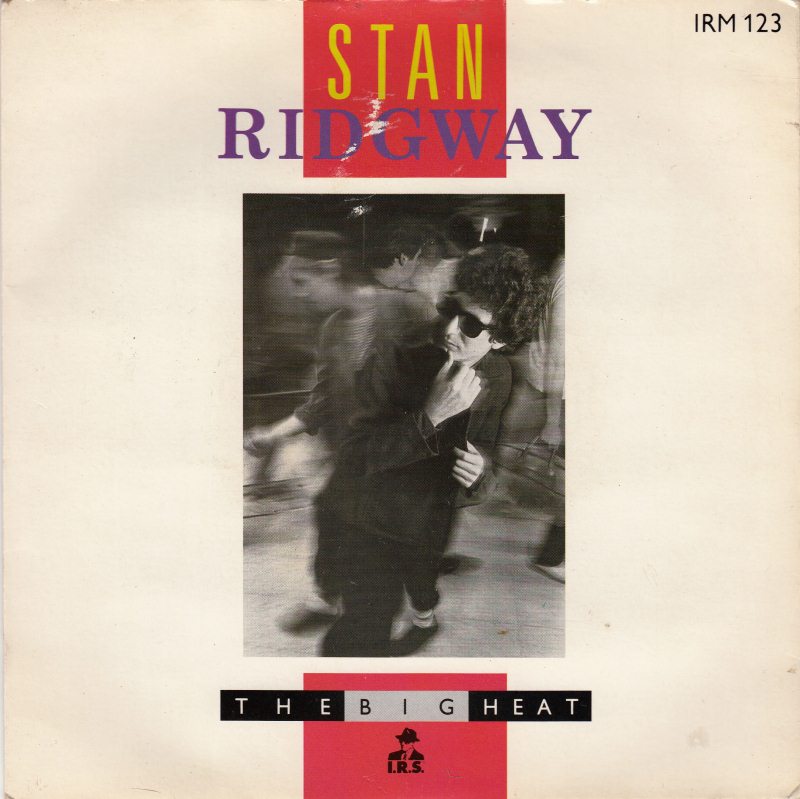
I had a very brief exposure to Wall Of Voodoo, so when Stan Ridgway jumped out with his first solo record The Big Heat I thought okay, what could this possibly be like? It is vastly different to Wall Of Voodoo. The two are different yet have a similar vibe that oozes forth.
The record has a very different complexion affronted to the listener. Released in 1986, has a kind of synthpop element going, but the main component is driven by storyteller's narration. Since I wasn't as familiar with Harry Nelson, whom Stan emulates aptly, is done only with his peculiarity. Stan does his best work by showing the listener different avenues of life, mostly from a down-on-your-luck or bad circumstances construction.
Each song has a character marked by a decided life event or twist. Some of the characters definitely do have a coldness that is unforgivable but we as the listener are given a very clear reason as to their motivation. The music itself is bound to that exposition by eliciting a vibrant, and very vivid soundtrack vibe. There are fiddles, keyboards, acoustic guitars, funk, all around a electronic beat pushing through.
As the years have gone by, nothing compares to this record. I've been fortunate to be untouched by the cynicism associated with this era, and I've got a pretty healthy appreciation of how this material fits in with my own kind of personal narrative. Yet at the same time has this very dark complexion that sadly is being re-routed for softer, and more evasive facets.
When Stan released his second solo record Mosquitos two years later, the novelty was evolving, waning, and what was morphing into a contemporary fragment. The Big Heat will be a favorite that I still continue to enjoy these many years later. Thanks for reading.
B.
Saturday, June 29, 2013
Camouflage - Voice & Images (80's Era)
 |
| Image From Camouflage-Music.com |
****/*****
I learned of Camouflage's first record Voices & Images back in 1988 with KJQ. My brief time with radio afforded me the ability to listen to other international acts like Pet Shop Boys, Erasure, OMD, Talk Talk, Nitzer Ebb, whereas stateside New Order, and InSoc. I became marginally versed in the Synthpop sound to gauge what was interesting versus what wasn't.
Voices & Images released in 1988, employs a message steeped in a profound sadness, seeking closure, and personal revelation. On the surface has a very feminine quality to the vocal style, but these are major compartments of a electronic post modernism at play.
I believe this record has an unusual sensation going as it goes against precept, and charges ahead doing whatever the creators intended it to be. I find I like this style of analog synth sound because of the warm cadence, whereas there are divots and valleys in the production that I think sound pretty awesome. The only drawback is the plastic electronic beat, I won't fault much with that aspect.
Creating texture with ambient keyboards, and heavy dark wave bass-lines, there are comparisons to Depeche Mode but I feel the lyrical prose, while experimenting with elements of Asian influence, and waltzes sells it. The record is definitely offbeat to what is expected and I like that perspective.
In the future I will be taking on Camouflage's next preceding records, and I'll come back here and add any further thoughts. Thanks for reading.
B.
Subscribe to:
Posts (Atom)